- English
- French
- German
- Portuguese
- Spanish
- Russian
- Japanese
- Korean
- Arabic
- Greek
- German
- Turkish
- Italian
- Danish
- Romanian
- Indonesian
- Czech
- Afrikaans
- Swedish
- Polish
- Basque
- Catalan
- Esperanto
- Hindi
- Lao
- Albanian
- Amharic
- Armenian
- Azerbaijani
- Belarusian
- Bengali
- Bosnian
- Bulgarian
- Cebuano
- Chichewa
- Corsican
- Croatian
- Dutch
- Estonian
- Filipino
- Finnish
- Frisian
- Galician
- Georgian
- Gujarati
- Haitian
- Hausa
- Hawaiian
- Hebrew
- Hmong
- Hungarian
- Icelandic
- Igbo
- Javanese
- Kannada
- Kazakh
- Khmer
- Kurdish
- Kyrgyz
- Latin
- Latvian
- Lithuanian
- Luxembou..
- Macedonian
- Malagasy
- Malay
- Malayalam
- Maltese
- Maori
- Marathi
- Mongolian
- Burmese
- Nepali
- Norwegian
- Pashto
- Persian
- Punjabi
- Serbian
- Sesotho
- Sinhala
- Slovak
- Slovenian
- Somali
- Samoan
- Scots Gaelic
- Shona
- Sindhi
- Sundanese
- Swahili
- Tajik
- Tamil
- Telugu
- Thai
- Ukrainian
- Urdu
- Uzbek
- Vietnamese
- Welsh
- Xhosa
- Yiddish
- Yoruba
- Zulu
What Are the Main Benefits of Using a Capacitive Pressure Sensor?
Capacitive pressure sensors deliver exceptional measurement accuracy, long-term stability, and robust performance across demanding industrial environments. Unlike traditional sensing technologies, these devices utilize changes in capacitance—caused by pressure-induced diaphragm displacement—to produce highly reliable electrical signals. This fundamental design principle enables superior sensitivity and consistency, making capacitive pressure sensors indispensable for diesel engine manufacturers, aftertreatment system integrators, and generator set producers who require stringent emission compliance and operational reliability. Their adaptability to harsh conditions, combined with cost-effective lifecycle performance, positions these sensors as strategic components in SCR systems, DPF monitoring, and exhaust gas treatment applications where precision directly impacts regulatory adherence and equipment longevity.
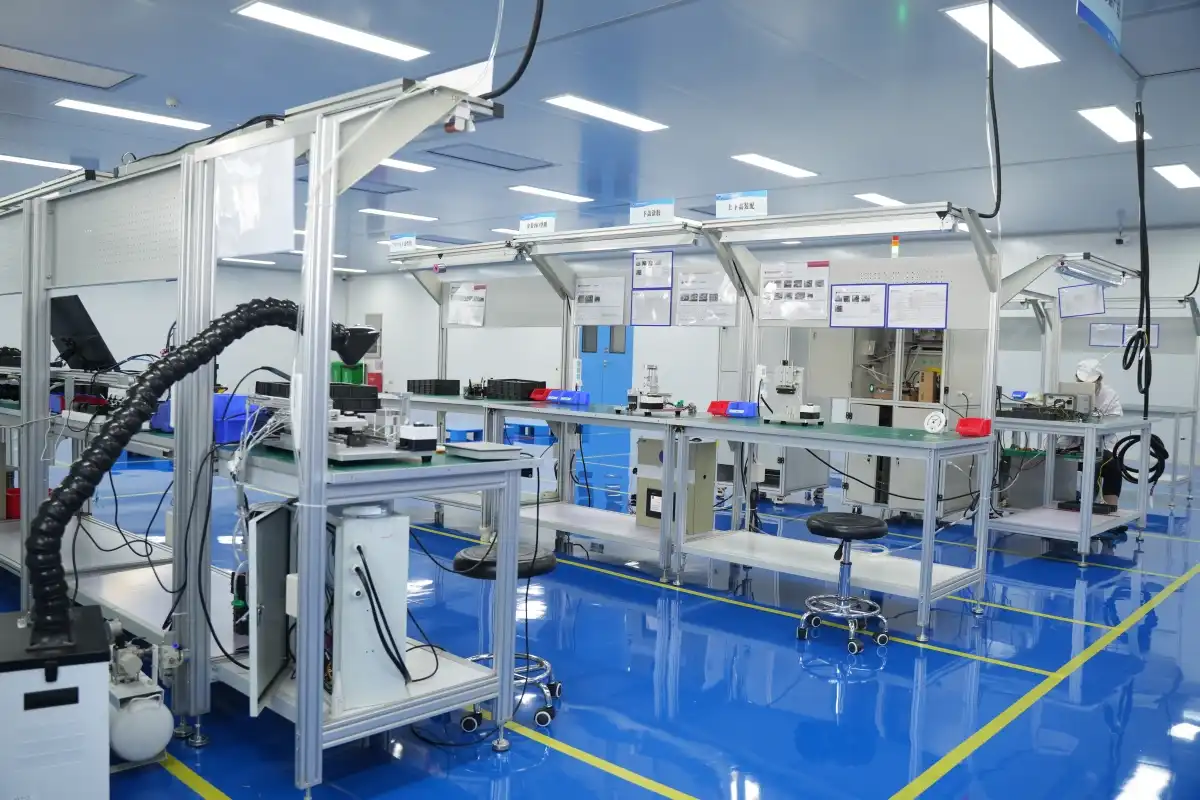
Understanding Capacitive Pressure Sensors: Principle and Working Mechanism
The Core Operating Principle
A very simple mechanism in capacitive sensing technology turns mechanical pressure into electrical signals that can be measured. A ceramic diaphragm, like the 96% Al2O3 material used in high-tech industrial devices, deforms slightly when pressure is put on it. This deformation changes the distance between the diaphragm electrode that can move and a reference electrode that stays in place. This changes the capacitance value of the system directly. Then, built-in signal conditioning circuitry changes these small changes in capacitance into standard electrical outputs that can be used by monitoring and engine control systems.
Comparison with Competing Technologies
Because they can respond quickly, piezoresistive sensors have generally been the best choice for heavy-duty tasks. But capacitive pressure sensor options now show clear benefits in how well they handle temperature and how accurately they measure. Even though strain gauge technologies have been used for a long time, they often have trouble with long-term drift in places with a lot of vibration, like construction and farming equipment.
Piezoelectric sensors are great at measuring dynamic pressure, but they can't keep an eye on steady pressure, which is needed for emission control systems. Our technical data shows that ceramic capacitive pressure sensor designs keep measurement accuracy within 0.3% full scale nonlinearity, which is a necessary requirement for meeting China VI and Euro VI standards.
Key Structural Components
The detecting system is made up of several carefully made parts that work together. The ceramic diaphragm is both the pressure interface and the movable capacitor plate. It was chosen because it is very resistant to chemicals found in diesel exhaust and hydraulic fluids.
Fixed electrodes keep the reference points, and powerful ASIC signal processors with built-in temperature compensation make sure that the output stays stable from -40°C to 135°C. Bridge resistance configurations of 11±30% kΩ provide stable electrical properties during mass production, which is something that OEM buying managers stress when they are looking at a supplier's ability to work with them in the long run.
Key Benefits of Capacitive Pressure Sensors in Industrial Applications
Sensor technologies that offer verifiable benefits across a number of performance factors are becoming more and more popular among businesses that buy things. Capacitive pressure sensor designs meet basic needs like accuracy, durability in harsh environments, and low total cost of ownership. Here are the main benefits that are driving growth in tough B2B markets:
Exceptional Measurement Accuracy and Repeatability: New ceramic capacitive pressure sensors can measure with an accuracy of ≤0.5% full scale, which is very close to the exact levels of accuracy needed for SCR dosing systems and DPF regeneration control. The QS-P105 model is a good example of this because it has 0.3% FS nonlinearity across pressure ranges from -1 bar to 600 bar.
This means that a single sensor platform can be used for many different tasks, such as monitoring intake manifolds and common rail fuel systems, capacitive pressure sensor integration further enhances this versatility by enabling precise, real-time pressure readings across these applications. This consistency in measurements directly supports emission compliance by making sure that NOx reduction catalysts get precisely controlled amounts of urea.
Superior Environmental Robustness: Heavy trucks, construction machinery, and farm equipment work in harsh conditions, including high temperatures, constant vibration, contact with corrosive fluids, and electromagnetic interference from electrical systems that carry a lot of current. Because of the way they are made and the materials they use, capacitive ceramic sensors naturally fight these problems. The alumina diaphragm doesn't break down when it's exposed to acidic exhaust condensates and hydraulic oils for a long time.
Temperature adjustment circuits keep drift below 0.03% FS/°C over a wide range of normal operating temperatures, and the mechanical design can handle the vibrations that come from diesel engines. The 200% FS safety overload rate is very important to technical managers who are in charge of integrating aftertreatment systems because it keeps catastrophic breakdowns from happening during pressure changes.
Cost-Effective Lifecycle Performance: The total costs of ownership go far beyond the initial purchase price. They include work for installation, calibration, upkeep, and how often the equipment needs to be replaced. Capacitive pressure sensors are very useful at all stages of their life. Their low power needs—the QS-P105 works well with supply voltages ranging from 2 to 30 VDC—lower the loads on electrical systems in battery-powered extras.
Because capacitive measurement principles are naturally stable, they don't need to be re-calibrated very often. This is especially helpful for companies that make generator sets that power remote mines or backup power installations where getting service is expensive. When comparing failure rates and warranty claim patterns, aftermarket purchasing managers like these traits of dependability.
All of these benefits affect the choices that are made by technical departments assessing sensor performance, buying teams comparing value offers from suppliers, and management okaying long-term partnerships. Because capacitive pressure sensor technology is accurate, long-lasting, and cost-effective, it is more of a strategy choice than just a part standard.
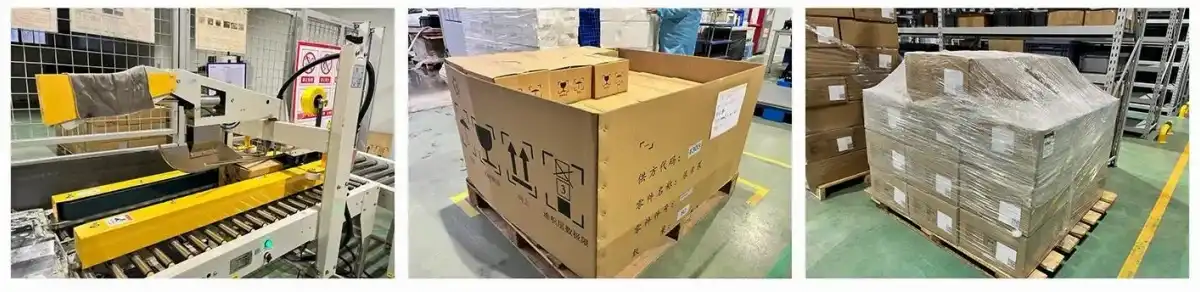
Capacitive vs Other Pressure Sensor Technologies: A Comparative Insight
Performance Characteristics Across Technologies
To choose the right technology, you need to know how the different sensing concepts work with the needs of the program. Piezoresistive sensors are still widely used in cars because they are easy to install and accurate enough for many monitoring tasks. But because they are sensitive to temperature, they often need complicated compensation algorithms, which add to the cost and can cause calibration drift over long service intervals.
Piezoelectric designs are great at measuring sudden changes in pressure, but they can't keep an eye on static pressures. This is a major problem for emission control systems that need to keep an eye on exhaust backpressure all the time. MEMS capacitive versions are better for making things smaller, but they usually give up the measurement range and overload safety that heavy-duty diesel uses need.
Application-Specific Selection Criteria
Procurement engineers need to make sure that the powers of sensors are in line with how they are used. Even though they are more expensive, common rail fuel systems that produce pressures above 2000 bar may choose piezoresistive designs that are made for high pressures. On the other hand, ceramic capacitive pressure sensors are better at detecting and keeping track of DPF differential pressure, which can work in ranges from 0 to 10 bar.
The QS-P105 has a wide range of pressure options, from -1/0 bar to 600 bar, and it integrates a capacitive pressure sensor to ensure high accuracy and stability across the entire measurement range. This lets multiple monitoring points on the same engine platform be standardized, which makes inventory management easier and makes purchasing simpler for supply chain managers.
Cost-Performance Trade-offs
Every choice about procurement is affected by budget limits, but focusing only on unit cost often leads to higher total project costs. For less expensive sensing technologies, you might need more signal processing parts, to calibrate them more often, or to repair them less often. Based on our work with OEM customers, ceramic capacitive pressure sensors usually have 15-20% lower lifecycle costs than other technologies.
This is because they don't need as much installation labor, calibration services, or warranty claims. This economic fact is especially important for companies that want to make a lot of things, because the reliability of sensors has a direct effect on how well production lines work and how well quality control measures them.
Procurement Considerations for Capacitive Pressure Sensors
Evaluating Manufacturer Credentials and Certifications
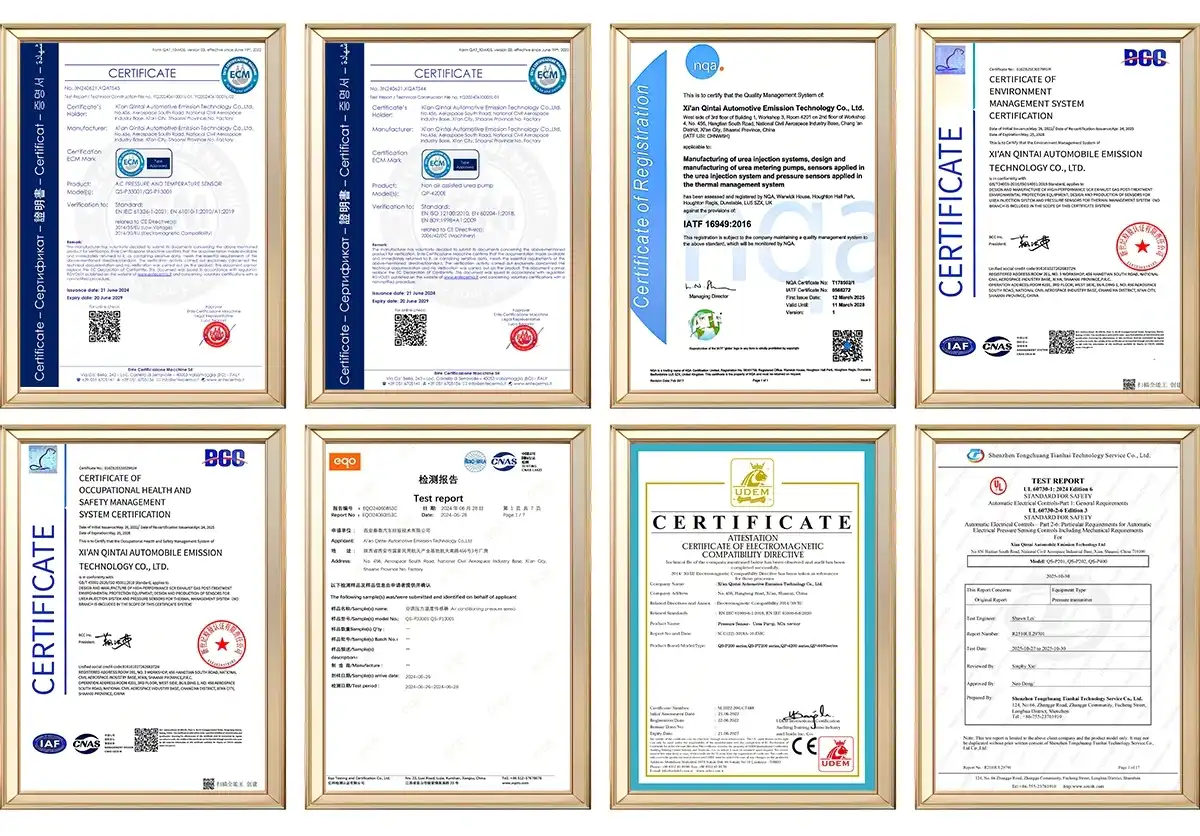
Comparing technical specs and unit prices is only one part of choosing a supplier. Established makers show what they can do by having quality badges and engineering qualifications that are recognized. The ISO9001 and IATF16949 certifications from Qintai make sure that the company's production methods meet the quality standards of the car industry. The company's compliance with CMC, Ex, UL, CE, REACH, and RoHS regulations also ensures that it follows the rules in all global markets.
When diesel engine manufacturers need written proof to show that they are following the rules, these certifications are important. Our R&D team has 58 invention patents, which shows that they are constantly investing in new ideas. This is something that technical departments look at when they are choosing long-term technology partnerships.
Technical Specifications and Customization Capabilities
Standard stock items work well for many uses, but equipment makers need custom solutions more and more. Changes to the pressure range, the electrical interface, the mounting configuration, and the output signal make it possible to integrate the sensor best with existing system architectures. This is shown by the QS-P105 platform's wide range of pressure choices and ability to work with source voltages from 2 to 30 VDC.
Solution engineers who make environmental protection equipment really value customization help because exhaust gas treatment systems often have specific interface and space needs. Our independent research and development (R&D) team works with clients from the first evaluation of an idea to the confirmation of production, offering technical help that goes beyond delivering the product.
Supply Chain Reliability and After-Sales Support
Production plans depend on knowing when parts will be available. When comparing suppliers, aftertreatment system integrators look at how fast they can deliver, since late sensor shipments can stop whole assembly lines. Established makers keep extra inventory and production ability to handle changes in volume, while younger companies may have trouble when demand goes up. After-sales services are just as important.
These include technical support for questions about installation, calibration services for precise applications, and quick troubleshooting when problems happen in the field. The difference between suppliers who work as true partners and those who are just filling orders is these service capabilities.

How to Maximize the Performance of Your Capacitive Pressure Sensor
Proper Installation and Initial Calibration
The performance of a sensor starts with how it is installed. When sensors pick up both the amount of the pressure and the effects of gravity on internal parts, the direction of the mounting changes how accurate the measurements are—and this is especially critical for a capacitive pressure sensor, whose diaphragm response can be subtly influenced by orientation and mechanical mounting conditions. The QS-P105 is easy to install because it has a simple fitting design, but installation staff must still follow torque guidelines to avoid mechanical stress that could change tuning.
Pressure port connections need the right way to seal them. Whether to use PTFE tape or an O-ring depends on the properties of the measured media. Using reference pressure standards for the first calibration check makes sure that sensors meet the requirements before they are put into service. This finds any problems with the manufacturing process or shipping damage before they affect how well the system works.
Environmental Compensation Strategies
Changes in temperature are the main external factor that affects the accuracy of measurements. Even though more advanced ceramic capacitive pressure sensors have built-in compensation, system designers still need to think about temperature differences between the sensor body and the media being recorded. When sensors are installed near exhaust manifolds or turbocharger housings, they are exposed to radiant heat that is higher than their sensing point temperature.
It can work in a lot of different temperatures (-40°C to 135°C), so it can be used in most diesel engine environments. It also has very low zero temperature drift (below 0.03% FS/°C for moderate pressure ranges), which keeps thermal errors to a minimum. Signal conditioning techniques, such as the right filters and noise avoidance methods, improve measurement quality even more in places with a lot of electrical noise and high-current alternators and electronic fuel injection systems.
Maintenance Protocols and Troubleshooting
Regular repair makes sensors last longer and stops them from breaking down without warning. By checking electrical connections on a regular basis, you can find corrosion or loose terminals before they cause signals to go out. By looking at the pressure port, you can find carbon deposits or particulate accumulation that might get in the way of measurements. Regular checks of the calibration, maybe once a year or when the equipment is due for service, make sure that the measurements stay accurate.
To fix sensor drift or outputs that don't work right, it's common to find the root causes by checking the stability of the power supply, the integrity of the signal cables, and the patterns of environmental exposure. These maintenance methods work especially well for generator sets used in harsh conditions, where the availability of equipment for important backup power functions depends on how reliable the sensors are.
Conclusion
Capacitive pressure sensors offer a great mix of accurate measurements, durability in harsh environments, and long-term value that meets the main needs of diesel engines, aftertreatment systems, and industrial equipment. Their high accuracy helps them follow pollution rules, and their strong ceramic construction means they can handle rough working conditions with little upkeep.
The technology is naturally stable and can be customized, which makes it perfect for OEM manufacturers looking for long-term supplier partnerships and system integrators needing solutions that can be changed quickly. As emission standards keep getting stricter and people expect equipment to work more reliably, capacitive pressure sensor technology gives makers the tools they need to meet these changing needs through proven performance and constant innovation.
FAQ
Why should diesel engine manufacturers choose capacitive pressure sensors over piezoresistive alternatives?
Capacitive pressure sensor designs are more stable over time and less sensitive to changes in temperature, which directly helps meet emission standards. The lower drift means that the capacitive pressure sensors don't need to be re-calibrated as often, which lowers the total cost of ownership for fleet operators while still meeting the accuracy standards set by China VI and Euro VI.
How do temperature fluctuations affect sensor accuracy in heavy-duty applications?
Modern ceramic capacitive pressure sensors have temperature correction hardware built in that actively fixes the effects of temperature. The QS-P105 shows this ability by having zero temperature drift specs below 0.03% FS/°C across normal operating ranges. This means that the measurements stay accurate even when the diesel engine warms up and the temperature outside changes.
Are these sensors suitable for hazardous environments in oil and gas applications?
When properly certified, capacitive pressure sensors can work safely in environments where explosives are present. The fundamentally safe design principles and Ex certifications allow them to be used in generator sets at industrial or mine sites where flammable gases may be present, as long as the installation follows the local electrical code and zoning rules.
Partner with a Trusted Capacitive Pressure Sensor Manufacturer
Xi'an Qintai Automotive Emission Technology Co. Ltd has been specializing in diesel engine aftertreatment systems and making precise sensors for over twenty years. They can help you with your purchase projects. As the main original equipment manufacturer (OEM) provider for China's biggest engine makers, with main partnerships with Weichai Power, Yuchai Power, and Quanchai Power, we know the exact standards that need to be met for emission compliance and operating reliability.
With our many certifications, 58 invention patents, and in-house research and development, you can be sure that you will get industrial-grade ceramic capacitive pressure sensors with quick technical support and customizable options. Get in touch with our team at info@qt-sensor.com to talk about your specific application needs and find out how our QS-P105 platform can help you meet your cost-cutting goals while improving system performance. Check out our full range of sensors at qt-sensor.com and see what a difference it makes to work with a dedicated capacitive pressure sensor supplier who is committed to the success of your project.
References
1. Webster, J.G. (2018). The Measurement, Instrumentation and Sensors Handbook: Spatial, Mechanical, Thermal and Radiation Measurement. CRC Press, Boca Raton, Florida.
2. Fraden, J. (2016). Handbook of Modern Sensors: Physics, Designs, and Applications (5th Edition). Springer International Publishing, Cham, Switzerland.
3. Wilson, J.S. (2005). Sensor Technology Handbook. Elsevier Inc., Burlington, Massachusetts.
4. Pallas-Areny, R., & Webster, J.G. (2001). Sensors and Signal Conditioning (2nd Edition). John Wiley & Sons, New York.
5. Bergstrom, P.L., & Ji, J. (2013). Capacitive Pressure Sensors for Industrial Applications. Journal of Microelectromechanical Systems, Volume 22, Issue 4, pp. 789-799.
6. Tian, B., Zhao, Y., Jiang, Z., & Hu, B. (2012). High-Temperature Capacitive Pressure Sensors: Design Considerations and Applications in Automotive Systems. Sensors and Actuators A: Physical, Volume 187, pp. 140-146.
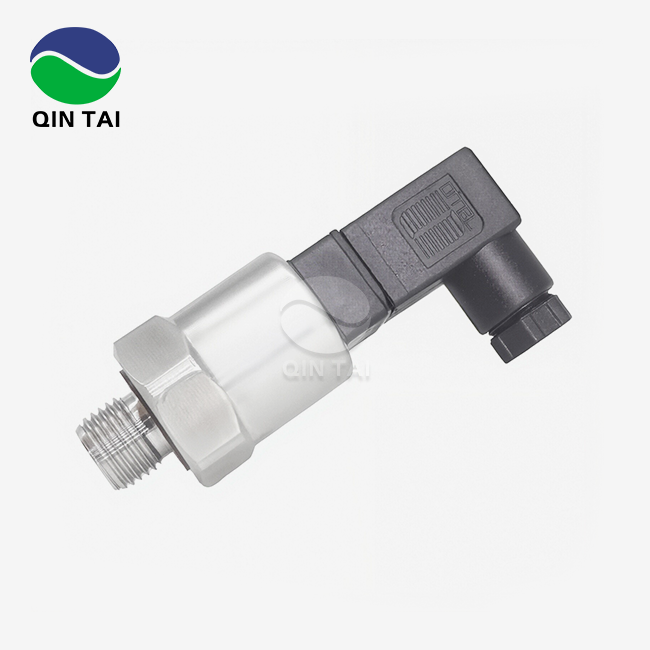

Our customers’ satisfaction speaks for our quality — contact us to experience the same reliable service.