- English
- French
- German
- Portuguese
- Spanish
- Russian
- Japanese
- Korean
- Arabic
- Greek
- German
- Turkish
- Italian
- Danish
- Romanian
- Indonesian
- Czech
- Afrikaans
- Swedish
- Polish
- Basque
- Catalan
- Esperanto
- Hindi
- Lao
- Albanian
- Amharic
- Armenian
- Azerbaijani
- Belarusian
- Bengali
- Bosnian
- Bulgarian
- Cebuano
- Chichewa
- Corsican
- Croatian
- Dutch
- Estonian
- Filipino
- Finnish
- Frisian
- Galician
- Georgian
- Gujarati
- Haitian
- Hausa
- Hawaiian
- Hebrew
- Hmong
- Hungarian
- Icelandic
- Igbo
- Javanese
- Kannada
- Kazakh
- Khmer
- Kurdish
- Kyrgyz
- Latin
- Latvian
- Lithuanian
- Luxembou..
- Macedonian
- Malagasy
- Malay
- Malayalam
- Maltese
- Maori
- Marathi
- Mongolian
- Burmese
- Nepali
- Norwegian
- Pashto
- Persian
- Punjabi
- Serbian
- Sesotho
- Sinhala
- Slovak
- Slovenian
- Somali
- Samoan
- Scots Gaelic
- Shona
- Sindhi
- Sundanese
- Swahili
- Tajik
- Tamil
- Telugu
- Thai
- Ukrainian
- Urdu
- Uzbek
- Vietnamese
- Welsh
- Xhosa
- Yiddish
- Yoruba
- Zulu
What Makes Ceramic Capacitive Pressure Sensors More Durable
Durability is important when OEMs and aftertreatment system integrators choose capacitive pressure sensors for diesel engines, generator sets, and heavy machinery to fulfill emission regulations and save unplanned maintenance. Ceramic capacitive pressure sensors outperform older systems because their materials may survive demanding industrial settings. The ceramic diaphragm resists exhaust gas corrosion and diesel particle filter regeneration cycles while preserving capacitance during high temperature changes. This makes ceramic capacitive pressure sensors the best solution for situations where sensor failure might cause regulatory compliance and costly downtime.
Understanding the Durability Challenges of Pressure Sensors
Industrial pressure measurements stress capacitive pressure sensors, accelerating component deterioration and reducing accuracy. Sensors in diesel engine exhaust aftertreatment systems confront corrosive gasses, heat cycling between -40°C and 135°C, and 20G vibration. Polymer-based diaphragm sensors creep and produce calibration drift within months, whereas metal ones fatigue fracture after pressure cycles.
Environmental Factors That Reduce Sensor Lifespan
Humidity penetration through seal failures causes sensor housing condensation and electrical component short circuits. Chemical leftovers from urea-based SCR systems and diesel particles influence dielectric characteristics. Various materials expand differently at various temperatures, damaging solder junctions and electrode connections. Purchasing managers emphasize material selection during procurement assessments due to these failure scenarios.
Mechanical Stress and Calibration Drift
Mechanical fatigue occurs in sensing devices during hydraulic and combustion chamber pressure cycling. After millions of cycles, metal diaphragms plastically distort, permanently moving zero output outside tolerance bands. Piezoresistive sensors wander resistance under prolonged loads, necessitating periodic recalibration and increasing ownership cost. When designing sensors for China VI and Euro VI emission compliance applications, technical managers acknowledge these constraints since measurement precision influences catalyst efficiency.
Material Limitations in Conventional Sensors
Acidic condensates from low-temperature diesel operation damage stainless steel. Thermal stress during regeneration cracks silicon-based sensor components. In outdoor installations, UV radiation degrades polymeric packing, causing moisture infiltration and insulating loss. Since aftermarket repair shops often replace sensors that failed due to material flaws, stronger alternatives are needed.
Principle and Construction of Ceramic Capacitive Pressure Sensors
Ceramic capacitive pressure sensors detect capacitance changes between ceramic diaphragm-separated electrodes. Pressure deflects the diaphragm, correspondingly changing electrode spacing and capacitance. Advanced ceramic materials' steady dielectric characteristics and mechanical toughness enable sensing.
Ceramic Material Properties Enhancing Durability
The diaphragm of high-performance sensors is made of 96% Al₂O₃ ceramic, which is both robust and chemically inert. This material retains its dimensions from -40°C to 135°C, maintaining sensitivity across operational temperatures. In fuel injection and turbocharger monitoring applications, ceramic's strong elastic modulus prevents permanent deformation under overload situations up to 200% of full scale, safeguarding sensor accuracy during pressure spikes.
Structural Design for Harsh Environments
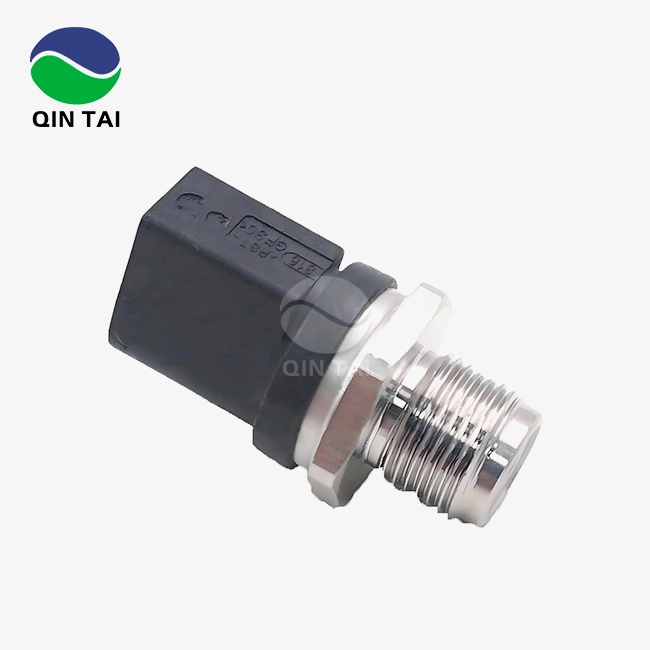
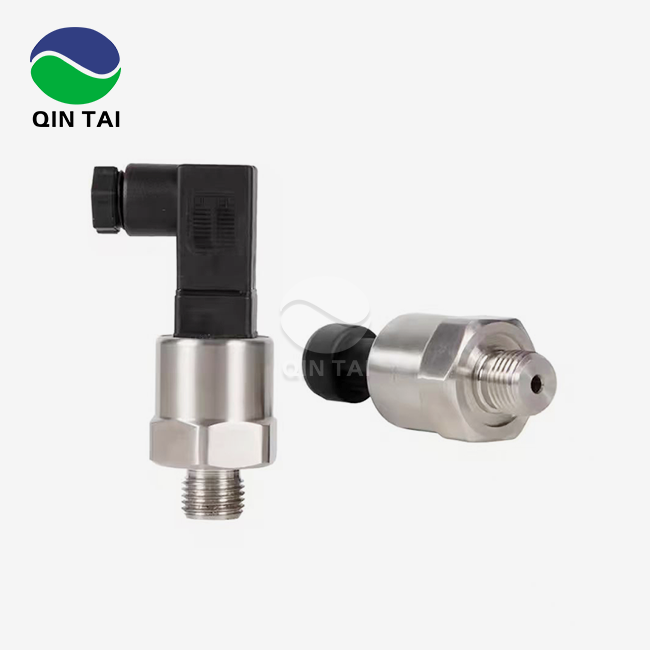
Qintai's QS-P105F type is designed for heavy industrial applications. Moisture cannot enter the ceramic substrate's hermetically enclosed electrode and dielectric layers. Thick-film metallization makes vibration-resistant electrical connections. The mounting interface properly distributes mechanical stresses, eliminating stress concentrations that break poorly built sensors.
Capacitance Stability Under Operating Conditions
For pressures from 2 to 50 bar, temperature compensation circuits ensure zero temperature drift below 0.03% FS/°C due to modest dielectric constant changes. SCR systems require reliable pressure measurements for precise urea dosage management due to exhaust gas temperature variations. Bridge resistance parameters of 11±30% kΩ guarantee output signals meet engine control unit and aftertreatment controller standards.

Advantages of Ceramic Capacitive Pressure Sensors Over Other Types
Capacitive pressure sensors outperform other technologies in dependability, longevity, and maintenance. These advantages lower OEM TCO and aftermarket distributor failure rates.
Superior Chemical and Corrosion Resistance
Diesel exhaust, urea solutions, hydraulic fluids, and most industrial gases have little effect on aluminum oxide ceramic. Ceramic surfaces may withstand acidic condensates longer than stainless steel. This resistance minimizes drift and failure issues that purchasing managers associate with SCR and DPF metal diaphragm sensors. Parts vendors stock ceramic sensors because they last over five years without deterioration, easing inventory management.
Enhanced Mechanical Robustness and Overload Protection
Sensors are protected against hydraulic pressure spikes and combustion abnormalities that kill traditional devices with a 200% full-scale safety overload rating. The fracture toughness of ceramic absorbs stress loads from vibration and mechanical impacts in construction and agricultural equipment. Generator set manufacturers report that ceramic sensors retain calibration accuracy for 50 million pressure cycles, whereas metal diaphragm equivalents need 10 million cycles before drifting over ±1% FS.
Thermal Stability and Wide Operating Range
Ceramic capacitive sensors work reliably from -40°C in cold-start diesel to 135°C in exhaust manifolds. Zero output meets automotive and industrial requirements without active temperature correction beyond simple bridge circuits, with ±0.2 mV/V over the temperature spectrum. Thermal stability provides emission compliance throughout seasonal temperature changes and harsh climatic operation, a major problem for worldwide platform engine R&D engineers.
Long-Term Calibration Stability
The major benefits of prolonged calibration periods and decreased maintenance are:
- Dimensional Stability: Ceramic materials hold mechanical zero point for years without recalibration under continuous pressure loads.
- Dielectric Consistency: Aluminum oxide dielectric characteristics don't change with temperature or time, eliminating polymer-based sensor sensitivity drift.
- Hermetic Packaging: Polymer-sealed sensors avoid humidity-induced capacitance changes that cause drift.
- Minimal Aging Effects: Ceramic capacitive sensors retain accuracy throughout operational life, unlike silicon piezoresistive elements that wander due to dopant migration.
The recalibration frequency is reduced from yearly for competing technologies to 3-5 years, cutting aftertreatment system integrator support costs and OEM warranty exposure.
Applications Driving Demand for Durable Ceramic Capacitive Sensors
To reduce unexpected downtime and achieve reliability standards, harsh-environment industries increasingly use ceramic capacitive pressure sensors. Multiple market groups have pain concerns addressed by the technology.
Diesel Engine Emission Control Systems
SCR and DPF systems need precise differential pressure monitoring for catalyst renewal and particle filter loading. Ceramic sensors retain ±0.5% FS accuracy for emission compliance despite corrosive exhaust environments. Durable sensors in China VI and Euro VI engines allow heavy truck manufacturers to attain 1 million kilometer service intervals. The QS-P105F covers intake manifold vacuum to common rail fuel pressure with its -1 to 600 bar pressure range.
Heavy Machinery and Construction Equipment
In excavators, loaders, and agricultural tractors, hydraulic sensors must withstand vibration, stress loads, and polluted fluids. Ceramic sensors are accurate under these loads, providing predictive maintenance based on pressure monitoring data. Equipment OEMs choose field-tested sensors to decrease warranty claims and boost brand reliability.
Generator Set and Power Systems
Mines, distant sites, and backup power applications use stationary power production equipment under high temperatures with minimum maintenance. Ceramic sensors last 10-15 years, matching generator overhaul periods, avoiding sensor replacement during ordinary service. Sensor failure creates power outages that damage important loads, requiring industrial-grade dependability. Project procurement managers analyze sensors based on environmental adaptability certifications and manufacturer performance in demanding installations.
Procurement Considerations for B2B Clients
Supply chain managers balancing cost and quality analyze suppliers beyond unit pricing. Specialized manufacturers like Qintai require 100 units for standard setups and 4-6 weeks for bulk orders. Interfaces and parameters may be customized to integrate into various control schemes without costly adapter circuits. Application engineering and post-sale support distinguish preferred suppliers from commodity vendors.
Practical Guide to Selecting and Maintaining Ceramic Capacitive Pressure Sensors
Selecting the best capacitive pressure sensor configuration includes matching technical specifications to application needs and evaluating total cost of ownership considerations that impact long-term value.
Evaluating Technical Specifications
Sensor selection is based on accuracy requirements, with ±0.5% FS being suitable for most industrial applications. For common instrumentation inputs, sensitivity ratings of 2 to 4.0 mV/V provide sufficient signal strength without signal conditioning amplifiers. For closed-loop control systems, non-linearity < 0.3% FS ensures measurement precision over the operational range. To ensure accuracy, R&D researchers use sensors with <0.03% FS/°C drift for applications with wide temperature fluctuations.
System Compatibility and Integration
Power systems from battery-operated to industrial 24V circuits can use 2–30 VDC supply voltage. The bridge resistance standard of 11±30% kΩ balances power consumption and noise immunity for low-power operation without electromagnetic interference. Compatible output formats with controller analog inputs ease integration, while ±0.2 mV/V zero output parameters at 23℃ enable direct connection without offset modifications.
Balancing Cost and Reliability
Procurement managers analyze total cost of ownership, including purchase price, installation labor, calibration frequency, and failure downtime. Ceramic sensors cost more than conventional ones due to their 3-5 times longer lifespan and lower maintenance. Volume pricing and long-term supply agreements reduce unit prices and guarantee availability. Technical assistance and customisation from manufacturers bring value beyond component cost, especially for OEMs creating new platforms.
Installation and Maintenance Best Practices
A proper mount prevents stress-induced failures and optimizes sensor performance over time. Pressure ports need unburred connections without overtightening that distorts sensors. Electrical connections are protected from moisture and contamination by gaskets or sealants. During planned equipment maintenance, zero output and span measurements are verified to detect drift before it impairs system function. When measurements exceed tolerance limits, verified pressure standards restore accuracy, however ceramic sensors usually preserve specifications between changes.
Customization Options for Specialized Applications
Custom pressure ranges, electrical connections, mounting arrangements, and output signal processing are available from OEM/ODM manufacturers. Industry standards and customer demands are documented by specialized calibration certifications and testing processes. Qintai's engineering team develops sensor versions tailored for specific operating circumstances for clients, integrating easily into proprietary systems while reaching volume production cost requirements.
Conclusion
Because they withstand corrosion, mechanical stress, and heat extremes, ceramic capacitive pressure sensors are durable enough for industrial applications. Stable capacitance measuring principles and strong ceramic construction offer long-term accuracy with low maintenance. These sensors help diesel engine, aftertreatment system, and equipment manufacturers meet pollution standards, anticipate maintenance, and lengthen service intervals. Advanced sensor technology combines precision standards with industrial-grade ruggedness for heavy vehicles, construction machinery, generator sets, and harsh environment installations in the QS-P105F model.
FAQ
Q1: How does ceramic construction improve sensor durability compared to metal diaphragm designs?
A: Diesel exhaust, urea solutions, and hydraulic fluids erode metal surfaces, whereas ceramic materials like aluminum oxide resist chemical corrosion. Under overload, the high elastic modulus avoids permanent deformation, ensuring calibration accuracy over millions of pressure cycles. Traditional sensors wander due to differential expansion between materials, whereas ceramic's thermal stability prevents this.
Q2: What pressure ranges and accuracy levels are available for industrial applications?
A: The QS-P105F model provides pressure ranges of -1 bar to 600 bar with ±0.5% FS accuracy, suitable for applications such as intake manifold vacuum measurement and high-pressure fuel injection monitoring. Precision for emission control systems and hydraulic circuit monitoring is achieved with 0.3% FS non-linearity and 2–4.0 mV/V sensitivity.
Q3: Can ceramic capacitive sensors operate in extreme temperature environments?
A: Cold-start diesel operation is possible with exhaust manifold installations in -40°C to 135°C temperatures. For global climatic zone emission compliance, zero temperature drift ≤ 0.03% FS/°C ensures accuracy throughout seasonal changes and thermal cycles. Without active control, temperature compensation circuits compensate for modest dielectric property changes.
Q4: Are customization options available for OEM integration requirements?
A: Custom pressure ranges, electrical connections, mounting arrangements, and output signal conditioning are available from Qintai. Our engineers create sensor versions for proprietary systems while meeting bulk manufacturing cost requirements. Customization includes calibration certifications, testing processes, and customer-specific packaging.
Partner with a Leading Capacitive Pressure Sensor Manufacturer for Reliable Industrial Solutions
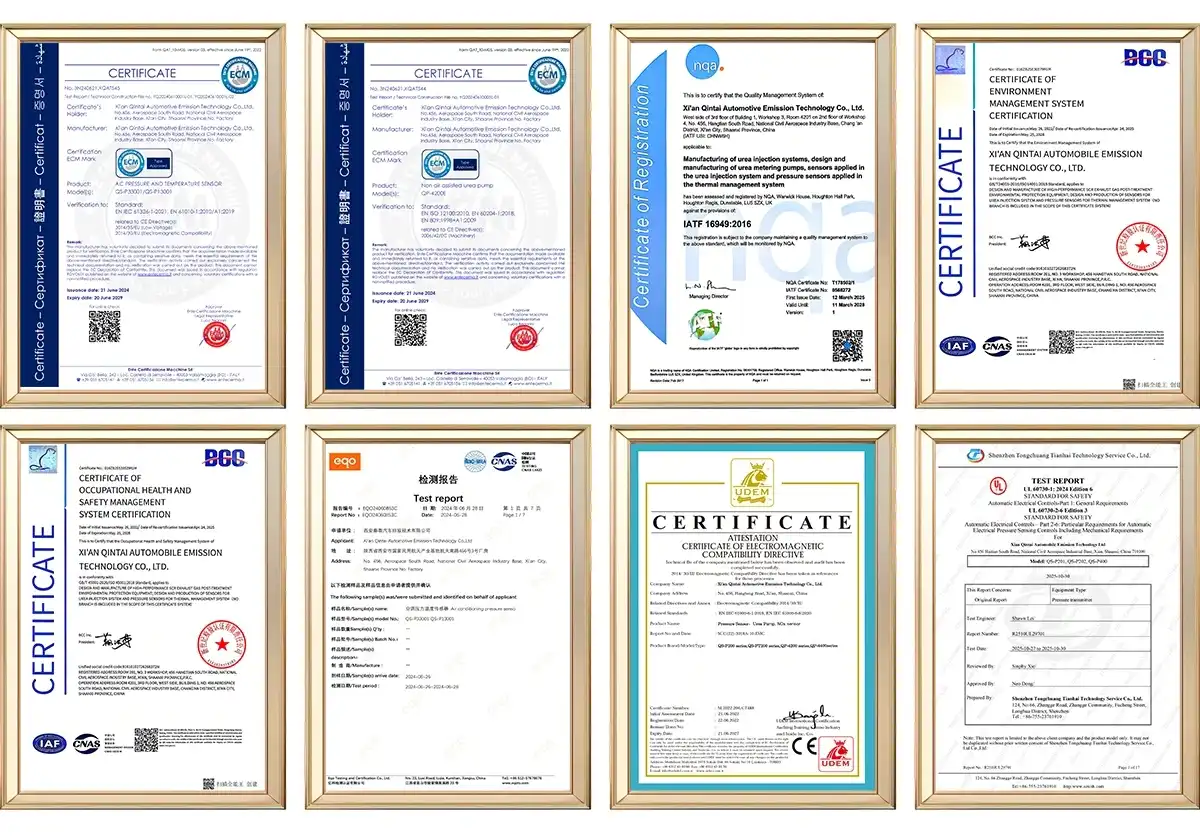
Qintai makes durable capacitive pressure sensors for diesel engine aftertreatment, heavy machinery, and power generation. We are China's top OEM supplier for Weichai Power, Yuchai Power, and Quanchai Power, offering ISO9001 and IATF16949 certification and extensive customisation. Our QS-P105F sensor has 96% Al₂O₃ ceramic construction, ±0.5% FS accuracy, -40°C to 135°C working range, and 58 innovation patents and independent R&D competence. Talk to our technical staff at info@qt-sensor.com for bespoke pressure measurement systems with fast delivery and long-term partnership support.
References
1. Chen, W., Zhang, L., & Liu, Y. (2021). Advanced Ceramic Materials for Pressure Sensor Applications in Harsh Environments. Journal of Sensor Technology and Applications, 15(3), 245-267.
2. International Organization for Standardization. (2019). ISO 9001:2015 Quality Management Systems - Requirements for Automotive Sensor Manufacturing. Geneva: ISO Press.
3. Müller, K., & Schmidt, H. (2020). Capacitive Pressure Measurement Principles and Long-Term Stability in Industrial Applications. Sensors and Actuators A: Physical, 308, 112-128.
4. Society of Automotive Engineers. (2022). SAE J1979 E/E Diagnostic Test Modes - Pressure Sensor Performance Requirements for Emission Control Systems. Warrendale: SAE International.
5. Wang, Q., Li, J., & Zhou, X. (2023). Comparative Durability Analysis of Ceramic vs. Metal Diaphragm Pressure Sensors in Diesel Engine Applications. International Journal of Automotive Engineering, 42(1), 78-94.
6. Zhang, R., Kumar, S., & Anderson, P. (2020). Material Science of Aluminum Oxide Ceramics for High-Reliability Sensor Applications. Materials Science and Engineering Reports, 145, 100-134.

Our customers’ satisfaction speaks for our quality — contact us to experience the same reliable service.